The machine in one page
Most of what this site tracks — the AI Act, CSRD, CBAM, pay transparency — is ordinary legislative procedure: Commission proposal, European Parliament and Council as co-legislators, then the Official Journal. Treaties sit above that. National law sits beside it. If you only remember one split: a regulation applies as written; a directive waits for Berlin, Paris or Warsaw to write their version.
Who does what
Three names get mixed up every week. The Council of the EU is ministers. The European Council is presidents and prime ministers. The Council of Europe is a different organisation in Strasbourg, and not an EU institution.
Proposes and polices
European Commission
The civil service of the Union, led by a College of Commissioners. Almost every law starts here. It also checks that Member States apply the text, and can take them to court.
Not a government of Europe. It cannot pass a law on its own.
The elected house
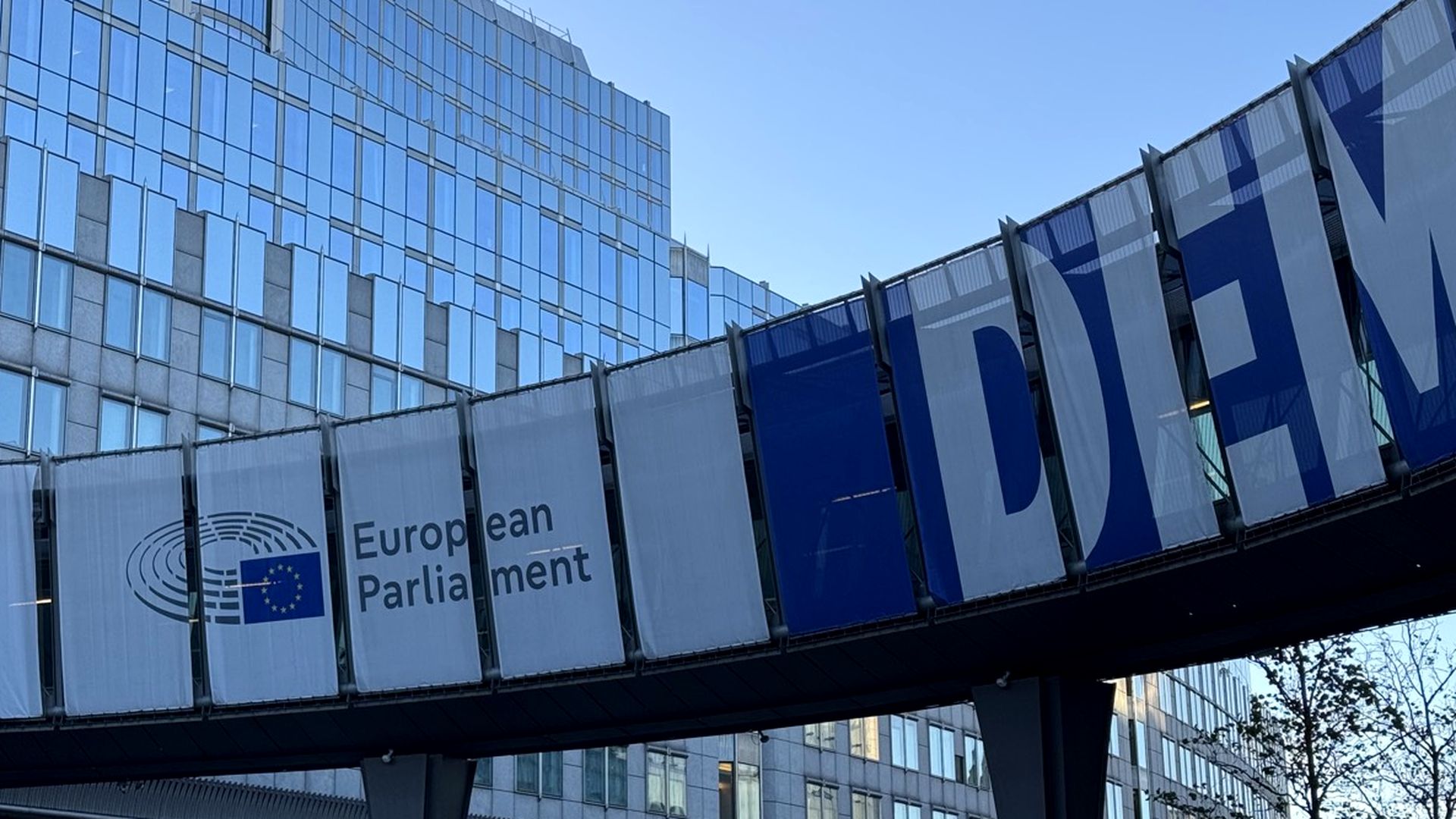
European Parliament
MEPs sit by political group, not by country. On ordinary files they co-legislate with the Council: they can amend, delay, or reject. Plenary in Strasbourg; committee work mostly in Brussels.
Not a talking shop. On the single market, environment, data and the budget it has a real veto.
The governments
Council of the EU
Ministers of the 27, in configurations (Ecofin, Environment, Justice…). Qualified majority is the usual vote: 55% of states, 65% of population. Unanimity still sits on tax and a few other files.
Not the European Council. That is the heads of state and government, who set direction and do not pass ordinary laws.
Direction, not drafting
European Council
Presidents and prime ministers plus the Commission President. They break deadlocks, name top jobs, and write conclusions. The legal text still has to go through Parliament and the Council of ministers.
A summit is not a statute. “Leaders agreed” is not the Official Journal.
The last word on the text
Court of Justice
Luxembourg interprets Union law and can strike down acts or national measures that clash with it. Preliminary rulings from national courts are how most people actually meet it.
It does not write the law. It says what the law already says.
Where most files land
Member States
Directives become national law. Regulations apply directly but still need a local cop — a data authority, a labour inspectorate, a customs desk. National parliaments also watch subsidiarity.
Brussels does not replace Berlin, Paris or Warsaw. It adds a layer.
What a “law” actually is
Regulation
Applies as written, in every Member State, on the apply-date.
On this site
GDPR, AI Act, CBAM, DSA.
Directive
Sets a result. Each country writes (or amends) its own law by a deadline.
On this site
NIS2, CSRD, pay transparency, EPBD.
Decision
Binding on those it names — a country, a company, or the Union itself.
On this site
A merger clearance, a programme, an infringement step.
Delegated / implementing act
The small print. The Commission fills in annexes and forms under a parent law. Parliament and Council can still object to delegated acts.
On this site
CSRD standards, CBAM default values, AI Act codes.
How a file becomes law
Ordinary legislative procedure — Articles 289 and 294 TFEU. The messy middle is trilogue. The legal moment is the Official Journal.
Right of initiative
The Commission tables a proposal after impact assessment, consultation, and often a political nod from the College. Parliament and the European Council can invite it to act. Citizens can try a European Citizens’ Initiative (a million signatures, seven countries).
Two houses, in parallel
Parliament assigns a committee and a rapporteur. The Council works in working parties, then COREPER, then ministers. They do not wait for each other.
Mandates
Parliament adopts a position (committee or plenary). The Council agrees a general approach or negotiating mandate. Only then do the rooms meet.
Trilogue
Informal three-way talks: Parliament, Council, Commission in the room. This is where most single-market files are actually closed. It is not in the Treaties as a formal step — it is how the machine learned to finish.
Provisional deal
Negotiators shake hands on a compromise text. Each institution still has to confirm: committee and plenary on one side, COREPER and ministers on the other.
Official Journal
Lawyer-linguists polish 24 languages. Formal votes. Publication in the OJ. That is the moment it is Union law — not the press conference, not the trilogue tweet.
Apply or transpose
A regulation switches on on its apply-date (often staggered). A directive gives Member States a clock to write national law. Late transposition is common. The Commission can sue. You still have to read the national gazette.
After the Journal
Regulations
Directly applicable. The apply-date in the text is the switch. National authorities still enforce — a DPA, a customs desk, a market-surveillance body.
Directives
Member States must transpose. Late is normal (NIS2, pay transparency). You read the national act, then the Union text if they clash.
You
Vote for MEPs. Complain to a national authority. A European Citizens’ Initiative can ask the Commission to propose — it cannot pass the law.
Where to watch a live file
EUR-Lex
The Official Journal, the adopted text, and the procedure number.
OEIL (Legislative Observatory)
Parliament’s file tracker: documents, votes, trilogues.
Council documents
Mandates, general approaches, and meeting calendars.
Commission Have your say
Consultations before a proposal, and feedback on drafts.
On this site: Talks for files still between the three institutions, EU Preview for what switches on next, Deadlines for apply-dates, Method for how we write the briefings.